Hotel Bathrobes: Fabric, Weight, Sizing, and How to Choose
Introduction
A bathrobe is one of the few hotel textiles a guest is invited to wear. It is handled, folded, sometimes taken home, and often judged by touch before the guest has finished unpacking. That makes it both a comfort item and a brand signal.
For hotel buyers, bathrobes are also a difficult category. They use more fabric than towels, they are heavier to launder and dry, and their sizing affects guest satisfaction in ways a towel never does. A robe that is too short, too thin, or too stiff can undermine an otherwise well-appointed room.
This guide covers the main fabric types, how weight and construction affect performance, how to think about sizing, and what to test before approving a sample.
Common Fabric Types
Hotel bathrobes are usually made from terry cloth, waffle weave, or, less often, flannel or blended knits. Each has a different feel and different care needs.
Terry Cloth
Terry is the most common choice. Loops of yarn on one or both sides of the fabric create absorbency and a soft surface.
Strengths:
- Good absorbency and warmth
- Familiar, comfortable feel for most guests
- Wide range of weights and price points
Considerations:
- Loops can snag or pill if the yarn quality or twist is poor
- Heavy terry takes longer to dry, which affects laundry scheduling
Waffle Weave
Waffle weave has a textured grid pattern that traps air. It is lighter than terry for a similar level of warmth.
Strengths:
- Lighter weight, easier to handle and fold
- Breathable, which some guests prefer in warm climates
- Dries faster than heavy terry
Considerations:
- Feels less plush to some guests
- The weave can show wear and loosen with repeated washing if the construction is weak
Flannel and Knit Blends
Flannel and knit robes are less common in hotels but appear in some resort and spa settings. They are soft and warm but can be more prone to pilling and shrinkage.
Weight and Construction
Bathrobe weight is usually expressed in grams per square meter (GSM), in the same way towel weight is described. For robes, GSM is a useful indicator, but it should be read alongside construction.
- Lighter robes are easier to launder and dry, and suit warm climates or high-turnover properties.
- Heavier robes feel more luxurious and provide more warmth, but cost more, take longer to dry, and need more storage space.
- Construction matters as much as weight. A robe with a tight, well-finished weave can outperform a heavier robe made with weak yarn.
When comparing samples, ask for the GSM and the fabric composition, and check that the sample weight matches the specification. GSM figures on paper are only useful if the delivered product matches them.
For more on how GSM affects towel performance, see our guide to hotel towel GSM. The same principles apply to robes, though the usable range is often different.
Sizing and Fit
Sizing is where many robe orders go wrong. A robe that fits one guest well may not fit another, but most hotels choose one or two sizes and keep them consistent.
Common sizing approaches:
- One size fits most. Simpler inventory, but may not suit very tall or very short guests.
- Two sizes (standard and large). A common compromise that covers most guest profiles.
- Three sizes (small, medium, large). Better fit, but adds inventory complexity and increases the risk of mismatched stock.
Measurements to request from suppliers:
- Length from the shoulder to the hem
- Chest or body width
- Sleeve length
- Belt length, and whether the belt is attached or loose
- Hood dimensions if the robe has one
Ask for a physical sample in the size you plan to order, and check that the stated measurements match the sample.
Design Details
Small details shape how a robe feels and how well it lasts.
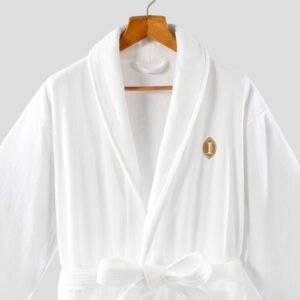
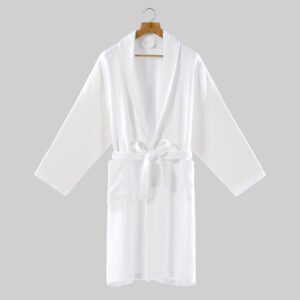
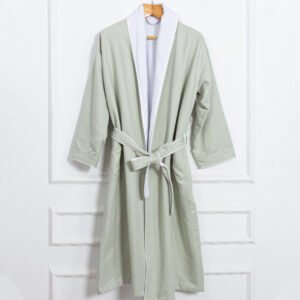
Collar. A shawl collar is the most common hotel style. Check that the collar lies flat and does not gape at the neck.
Pockets. Pockets are useful but add stitching and potential failure points. Ask how they are reinforced.
Belt. Belts are often the first part to wear out. Check the belt loop attachment and the belt material. Some hotels choose robes with fixed sashes to reduce loss.
Seams. Double-stitched seams at the shoulders, underarms, and side seams hold up better under frequent laundering.
Hems and edges. Check whether the hem is folded and stitched neatly, and whether the edges are finished to prevent fraying.
Embroidery. If the robe carries a logo, the same considerations apply as for custom towels. Ask for a washed sample to check how the embroidery holds up. Our article on custom hotel linens covers this in more detail.
Laundering and Drying
Bathrobes are bulkier than towels and need careful handling in a commercial laundry.
- Load capacity. Avoid overloading, which can prevent proper rinsing and extend drying time.
- Temperature. Confirm the recommended washing temperature with the supplier. Some dyes and yarns are sensitive to heat.
- Drying. Heavy robes need more time and airflow. Check the core of the robe for dampness, since a surface that feels dry can still hold moisture inside the terry loops.
- Finishing. Robes can be folded or hung. Folding flat for storage helps maintain shape, while hanging suits guest rooms where robes are displayed.
- Inspection. Remove robes with torn seams, loose loops, or stains that will not come out, as these can affect guest perception and safety.
An Illustrative Inventory Example
The figures below are examples only and do not reflect a specific supplier or market.
A 100-room hotel provides one robe per room and keeps a 15% spare stock for stains, damage, and out-of-service items. Robes are collected and laundered on a three-day cycle.
| Item | Quantity (example) |
|---|
| Robes in rooms | 100 |
| Spare stock (15%) | 15 |
| Total robes | 115 |
Because the laundry cycle is three days, the hotel should confirm that its stock covers the days robes are being washed. As a simple check, the number of robes needed for each day of the cycle should be on hand at all times. Your actual numbers depend on occupancy, whether robes are provided to every guest, and how often they are replaced.
Questions to Ask Before Approving a Sample
- What is the fabric composition, and what is the exact construction type?
- What is the GSM, and does the delivered sample match it?
- What are the body, length, sleeve, and belt measurements?
- Is the sample pre-shrunk, and what is the shrinkage after washing?
- How are the seams, pockets, and belt attachments reinforced?
- Has the sample been washed and dried in a commercial laundry, and can you share the results?
- What is the recommended laundering procedure, including temperature and drying?
- What is the expected service life under commercial laundering, and what is the basis for the estimate?
- If embroidery or printing is included, what is the durability after washing?
- What is the warranty, and does it cover seam failure, shrinkage, and color loss?
Common Mistakes
Ordering based on appearance alone. A robe that looks plush on a display rack can feel stiff or thin in use, or lose its loft after a few washes.
Choosing only one size. A single size may suit most guests but cause complaints from the rest. Consider the guest profile before deciding.
Ignoring drying time. Heavy robes can add significant time to the laundry schedule. Confirm capacity before ordering.
Overlooking belts and pockets. These are common failure points and are often the first complaint after a few months.
Skipping the washed sample. Shrinkage and fabric changes often appear only after laundering.
Working With Galaxy Hotel Supplies on Bathrobes
Galaxy Hotel Supplies can discuss bathrobe fabric, weight, sizing, and design options for hotel properties. Before placing an order, we recommend:
- Requesting a physical sample in the size you plan to order
- Asking for a washed sample and laundering guidance
- Confirming GSM, measurements, shrinkage, and warranty terms in writing
- Deciding on sizes and embroidery before production begins
Because specifications and documentation vary by product, please request current information for any item you plan to purchase.
Request bathrobe samples → Browse hotel bath products →
Related Reading
Questions about hotel bathrobes? Email us at info@hotelsupplieschina.com