A new hotel, or a room renovation, can involve dozens of separate purchases. Bedding comes from one supplier, bath linens from another, bathrobes from a third, and amenities, guest room accessories, and restaurant or spa textiles from others again. Each supplier has its own specifications, lead times, and invoicing. By the time the rooms are ready, the property may have a collection of items that do not quite match in color, finish, or fit.
One-stop sourcing is an approach that tries to reduce that fragmentation. Instead of buying every category from a different vendor, a hotel works with a supplier that can cover several categories, or at least coordinate them. The benefits are easier communication, more consistent specifications, and a single point of accountability. The trade-offs are also real, and this guide covers both.
What “One-Stop” Really Means
The phrase is used loosely in the industry. It can mean:
A single supplier for every item. Rare in practice, because few companies make everything well.
A supplier that makes some items and sources others. More common, and workable if the supplier is clear about which is which.
A supplier that coordinates a project. The supplier manages specifications and timing across categories, even if some items come from partners.
Before accepting a one-stop proposal, ask which of these models applies. A clear answer is more useful than a broad promise.
Benefits of Consolidated Sourcing
Consistent specifications
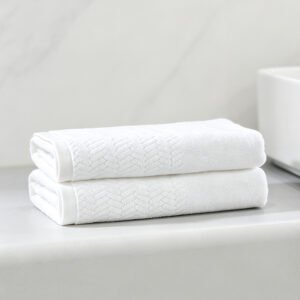
When one team manages the whole order, it is easier to keep fabric weights, colors, and finishes consistent across categories. A towel and a bathrobe in the same property can be specified to work together, rather than being chosen independently.
Matching colors and styles
Color matching is one of the hardest parts of a room setup. A consolidated order makes it easier to plan a palette across bedding, bath linens, and accessories, and to request samples that are reviewed together.
Simpler communication
One contact who understands the full project reduces the number of conversations and the chance of misunderstanding. This matters most during design approval and when problems need quick resolution.
Easier scheduling
Coordinating delivery dates across several suppliers is time-consuming. A single supplier can plan production and shipping for multiple categories, which can simplify installation and opening schedules. Lead times still vary by product, so schedules should be confirmed for each category.
Clearer accountability
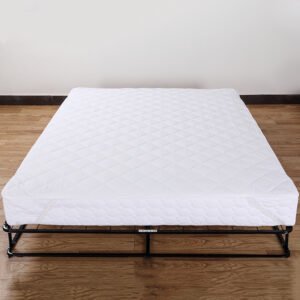
When a problem arises, it is clearer who to contact if one supplier manages the project. This is especially useful when items from different categories interact, such as a mattress protector under a bed sheet and a pillow.
Trade-Offs to Consider
A consolidated approach is not always the best choice.
Specialist strength. A supplier that excels in one category may not be the best option for every other category.
Price comparison. Bundling can make it harder to compare the price of each item separately. Ask for an itemized quote.
Dependence on one partner. If the supplier has capacity issues, several categories may be delayed at once.
Sourcing transparency. A supplier that sources some items from partners should say so, so the buyer knows where each product comes from.
A reasonable middle path is to consolidate categories where consistency matters most, such as guest room bedding and bath linens, and to keep specialist items with specialist suppliers where that makes sense.
Planning a Room Setup Order
A structured approach helps avoid gaps and duplicates. Consider these steps:
List every category for each room type, including bedding, bath linens, bathrobes, pillows and duvets, mattress protectors, and any accessories.
Define the room palette and quality level, and record them in a single specification sheet.
Confirm quantities for each category, using occupancy, laundry cycle, and spare stock assumptions. Our article on hotel linen quantity planning explains the method.
Request samples together, so the color and finish of each category can be reviewed side by side.
Confirm lead times and minimum order quantities for each category separately. These depend on the product and the process, and should not be assumed to be the same across items.
Agree on delivery sequence, so items arrive in the order the installation team needs them.
Set up a receiving checklist to verify quantities, specifications, and any defects at delivery.
Questions to Ask a One-Stop Supplier
Which categories do you manufacture yourselves, and which do you source from partners?
Who is the project contact, and how do they coordinate with production?
Can you provide a single specification sheet covering all categories?
How are colors and finishes matched across categories, and what samples can I review together?
What are the lead times and minimum order quantities for each category?
Can you provide an itemized quote so I can compare each category?
How are substitutions handled, and how are changes approved in writing?
What is the warranty for each category, and does the warranty process differ between categories?
Which services are included with a one-stop order, and which are charged separately?
What is the process for resolving a problem that involves more than one category?
Common Mistakes
Accepting a bundled quote without an itemized breakdown. This makes it difficult to compare or negotiate.
Assuming all categories share the same lead time. Each product has its own production process.
Choosing matching colors without checking them together. Samples viewed separately can look different in the room.
Leaving the specification sheet informal. Verbal agreements about fabric, fill, or finish are hard to enforce later.
Skipping receiving checks. Problems found after installation are more costly to fix.
Working With Galaxy Hotel Supplies on Room Setup Projects
Galaxy Hotel Supplies is an integrated factory-trader. We supply pillows, duvets, bathrobes, mattress protectors, restaurant linens, and spa linens, and we provide matching services for other hotel supplies. We hold ISO 9001 and Oeko-Tex certifications; please check the scope of each certificate against the products you plan to order.
For custom work, we offer embroidery, woven borders, printing, and labels. Minimum order quantities and lead times depend on the complexity of each product and its production process, so we confirm them for each category rather than applying a single standard.
We do not provide laundry or linen rental services.
For room setup projects, we recommend sending your room types, quantities, and quality requirements so we can prepare an itemized quote and specification sheet for review.
Manufacturer, trading company, or integrated factory-trader? Learn how each model affects quality, customization, lead time and accountability, and what to ask before you buy.
Hotel spa linens explained: massage table sheets, treatment towels, robes, and pool linens. Fabric, fit, lint, hygiene, and a checklist for approving samples.
In-house vs outsourced hotel laundry compared: volume, turnaround, space, staffing, quality control, and total cost per item. A framework and checklist for deciding.
Hotel mattress protectors and pads explained: waterproof barriers, seam construction, top fabrics, sizing, and laundering. Questions to ask before approving a sample.


 What “One-Stop” Really Means
 Planning a Room Setup Order