One-Stop Hotel Supply Sourcing: Buying Linens and Room Supplies Together
One-stop hotel supply sourcing explained: consistent specifications, matching colors, simpler communication, and trade-offs. A planning checklist for room setup projects.

Guests rarely notice a mattress protector. That is the point. When it works, the mattress stays clean, dry, and comfortable, and nobody thinks about it. When it fails, the result is a stained mattress, a damp bed, or a complaint that a housekeeping team has to resolve in a hurry.
For hotel buyers, mattress protectors and pads are a practical category with a long service life compared with sheets and towels. They protect a much larger investment, the mattress itself, so the right choice affects both guest comfort and the replacement schedule for mattresses.
This guide explains the main types, the difference between a protector and a pad, what to look for in waterproof construction, and what to test before ordering.
The terms are often used interchangeably, but they describe different products.
Mattress protector. A thin, fitted cover that sits on top of the mattress and under the sheets. Its main job is to guard against spills, stains, dust, and allergens. Most protectors are designed to be removed and laundered frequently.
Mattress pad. A thicker layer, often quilted or padded, that adds softness and sometimes a small amount of cushioning. Pads are usually placed over the mattress and may be combined with a protector.
In many hotels the protector is the standard item, and the pad is used selectively, for example in suites or for guests who request extra comfort. Clarify with your supplier which product is being quoted, because the specifications and pricing differ.
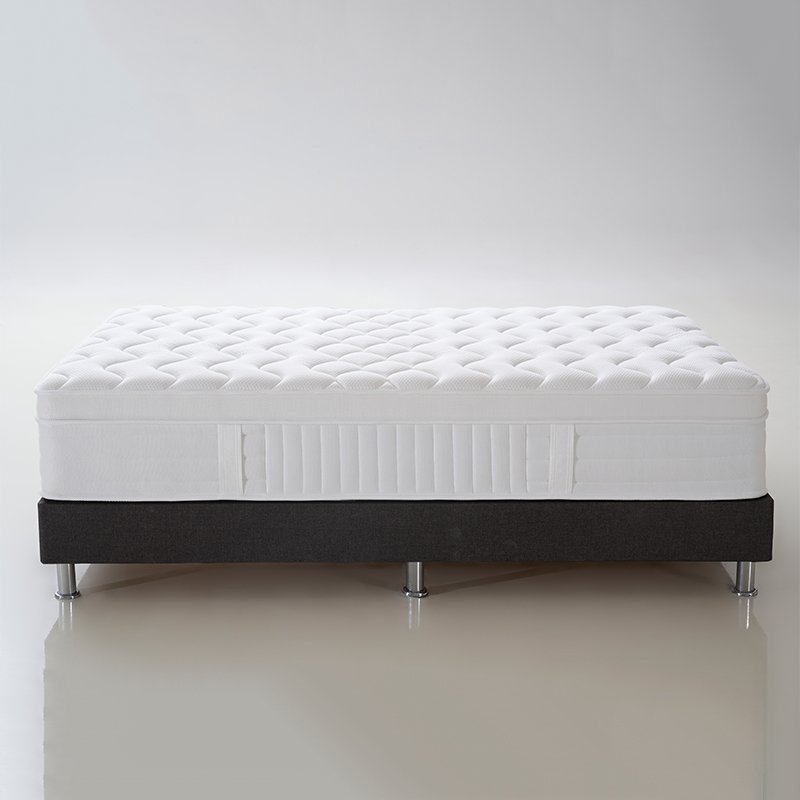 Waterproof vs. Water-Resistant
This distinction matters more than any other specification in this category.
Waterproof protectors have a barrier layer that stops liquid from passing through, even under pressure. Liquids can soak into the surface fabric, but they should not reach the mattress.
Water-resistant protectors slow down liquid absorption but may let moisture through over time, particularly with repeated washing or sustained pressure.
Be cautious with marketing language. Words like “waterproof,” “water-resistant,” and “liquid-proof” have no single universal definition in every market. Ask suppliers to describe the barrier construction, the barrier material, and the test method they used. Request documentation of the test, and verify any certification claims directly with the issuing body.
The waterproof layer is the core of a hotel mattress protector. Common approaches include:
Polyurethane (PU) laminate. A thin film bonded to the back of the fabric. It is common and affordable, but it can crack, peel, or become stiff with repeated high-temperature washing.
Membrane laminates. A breathable membrane, often made from a polymer, bonded to the fabric. These are typically more breathable than PU and may hold up better over many laundering cycles, depending on the product.
Coated fabrics. Fabric with a surface coating. Performance depends heavily on the coating quality and how it bonds to the substrate.
Sealed or bonded seams. On waterproof protectors, the seams are a common point of failure. Ask whether seams are sealed or bonded and how the protector is constructed around the edges.
Breathability. Waterproof barriers can trap heat and moisture if poorly designed. A protector that is too warm may affect guest sleep comfort and can contribute to moisture buildup in the mattress if the product does not allow vapor to pass through.
The top layer of a protector or pad is what the guest feels through the sheets.
Ask for the top fabric composition and a sample that you can feel through a sheet. Comfort is subjective, so it is worth having housekeeping staff review the sample too.
Protectors are sized to mattress dimensions and depth. Hotel mattresses vary in depth, and a protector that is too shallow may pull off during changes, while one that is too deep may bunch or fail to fit properly.
Check:
Measure several mattresses in your inventory, not just one, since depth can vary between batches and manufacturers.
Mattress protectors are laundered frequently, so their washing behavior matters.
Commercial laundering is harder on protectors than home laundering. Ask for a wash test before approving a sample, and request the number of cycles tested.
Protectors wear out faster than mattresses, and their failure is often hidden until a stain or dampness appears. A simple inspection schedule helps:
Replacement timing depends on the product, the laundering process, and how often protectors are used. Ask suppliers for their expected service life under commercial laundering and request the basis for that estimate. Treat any figure as a planning assumption until your own inspection data confirms it.
The numbers below are examples for planning only. They do not reflect a specific supplier or market.
A 100-room hotel uses one protector per bed, with 110 beds in total (including suites with two beds). It keeps a 15% spare stock and runs a three-day laundry cycle.
| Item | Quantity (example) |
|---|---|
| Beds in service | 110 |
| Spare stock (15%) | 17 |
| Total protectors | 127 |
Because protectors are changed as part of normal housekeeping, the inventory should cover at least one full laundry cycle plus a buffer for failures. Your figures depend on how often you change beds, whether protectors are used on every bed, and how quickly your laundry returns them.
Assuming all waterproof products perform the same. Barrier type, seam construction, and laundering all affect real-world performance.
Choosing by thickness alone. A thick pad may feel comfortable but still fail to protect against liquid if the barrier is weak.
Using harsh detergents or softeners. These can degrade barrier coatings and reduce protection over time.
Ignoring heat. Overdrying or high-temperature cycles can damage laminates that looked durable when new.
Ordering the wrong depth. A protector that does not fit the mattress depth will pull off, bunch, or fail, creating guest complaints and extra work.
Skipping inspection. A barrier that has failed may not be visible until liquid reaches the mattress. Regular inspection is the only reliable early warning.
Galaxy Hotel Supplies can discuss mattress protectors and pads for hotel properties, including barrier options, top fabrics, and sizing. Before placing an order, we recommend:
Because specifications and documentation vary by product, please request current information for any item you plan to purchase, including any test reports you need to verify.
Request mattress protector samples → Browse hotel bedding products →
Questions about mattress protectors and pads? Email us at info@hotelsupplieschina.com
One-stop hotel supply sourcing explained: consistent specifications, matching colors, simpler communication, and trade-offs. A planning checklist for room setup projects.

Manufacturer, trading company, or integrated factory-trader? Learn how each model affects quality, customization, lead time and accountability, and what to ask before you buy.
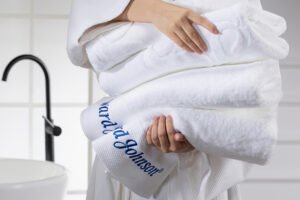
Hotel spa linens explained: massage table sheets, treatment towels, robes, and pool linens. Fabric, fit, lint, hygiene, and a checklist for approving samples.

In-house vs outsourced hotel laundry compared: volume, turnaround, space, staffing, quality control, and total cost per item. A framework and checklist for deciding.