One-Stop Hotel Supply Sourcing: Buying Linens and Room Supplies Together
One-stop hotel supply sourcing explained: consistent specifications, matching colors, simpler communication, and trade-offs. A planning checklist for room setup projects.

 Testing Hotel Linen Samples: A Hands-On Protocol for Buyers
A sample can look perfect on a supplier’s table and still fail in your laundry. The fabpillows ric may feel soft out of the package, the color may match your brand card under showroom lighting, and the seams may look neat. None of that shows how the item will behave after fifty commercial washes, in your water, with your detergent, dried at your temperature.
Sample testing is the buyer’s best protection against costly mistakes. It takes time and some discipline, but a structured test is far more informative than a visual inspection or a feel test alone.
This guide sets out a practical protocol that a hotel can run in its own facilities, with simple equipment and clear records. It is designed to work with any supplier and any category of linen.
Write down the performance requirements before samples arrive. Common ones include:
A test without a defined requirement is hard to judge. “It looks good” is not a result.
 Set up a baseline
Keep one item from your current stock, or a reference item from a previous order, as a control. Test it alongside the new sample under identical conditions. This gives you a comparison point that is far more useful than an abstract specification.
Mark each sample with a code, the date received, the supplier, and the specification as stated on the quote. Keep a single record sheet. Samples mixed together in a laundry bag are easy to lose track of, and results are meaningless if you cannot say which item was tested.
Before washing, measure and record:
Keep the photographs with the record sheet.
 Step 2: Run a Commercial Wash Cycle
Wash the samples in a machine that resembles your production equipment, using your normal process: temperature, detergent, cycle length, and load size. If your laundry is outsourced, ask the provider to run the test, or to advise on the process to replicate.
Important points:
Some tests are most meaningful at intervals. Check the samples at 10, 25, and 50 cycles, for example, rather than only at the end.
Dry the samples in your dryers, at your temperatures, for your cycle times. Drying is often where problems appear, particularly with blends, coatings, and filled products.
After each drying cycle:
Do not rely on the feel of the outer surface to judge dryness in thick items.
At each checkpoint, compare the sample with its initial record and the control item.
Dimensional change. Measure again, using the same method. Calculate the change as a percentage of the original dimension. Ask the supplier for their stated shrinkage tolerance and compare.
Color change. Compare the sample against the original photograph under the same lighting. Note any fading, yellowing, or color shift, and whether it is uniform or patchy. A simple grey scale for colorfastness is useful if you have one.
Surface and pilling. Examine the surface under good light, and if possible use a pilling test method or a comparison with the control. Record the level of pilling you observe rather than writing “some pilling.”
Absorbency. For bath and treatment textiles, drop a measured amount of water onto the surface and time how long it takes to absorb. Repeat after each checkpoint. A change in absorbency after washing can indicate residue from detergent or softeners.
Seams and hems. Inspect for fraying, puckering, loose threads, or opened stitches. A gentle pull test on seams, using a consistent force, can show weak points. Do not pull hard enough to damage a good sample.
Hand feel. Repeat the softness rating at each checkpoint, with the same people where possible.
Compare each sample with its requirement, not with another sample alone. A sample can be better than others and still fail your requirement.
A simple grading approach works well:
| Result | Meaning |
|---|---|
| Pass | Meets the defined requirement at the final checkpoint |
| Conditional | Meets the requirement with a noted concern, such as minor pilling |
| Fail | Does not meet the requirement at one or more checkpoints |
Record the reason for each grade. A conditional result with a clear reason is more useful for negotiation than a vague pass.
Testing only once. Early results often look good. Problems tend to appear after repeated washing.
Using a different wash process from production. A test in a domestic machine on a gentle cycle will not predict commercial performance.
Skipping the control. Without a baseline, it is hard to tell whether a change is significant.
Judging by the first impression. Softness and appearance can change significantly after the first few cycles.
Losing track of samples. Unlabeled samples invalidate the test. Label and record everything.
Ignoring drying. Many failures are caused by the dryer, not the wash.
Test results are most useful when shared with the supplier before the order is placed. Ask the supplier to:
If the supplier cannot provide a clear specification or explanation, that is a reason for caution.
Galaxy Hotel Supplies can provide samples for evaluation across the product categories we supply, including pillows, duvets, bathrobes, mattress protectors, restaurant linens, and spa linens. We recommend requesting a physical sample and, where possible, a commercially washed sample, and agreeing on the test criteria in writing before production begins.
Please confirm current specifications, certificate scope, and laundering guidance with us for each product you plan to test.
Request samples for testing → Browse our products →
Questions about sample testing? Email us at info@hotelsupplieschina.com
One-stop hotel supply sourcing explained: consistent specifications, matching colors, simpler communication, and trade-offs. A planning checklist for room setup projects.
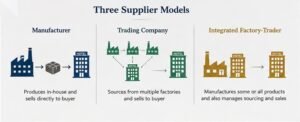
Manufacturer, trading company, or integrated factory-trader? Learn how each model affects quality, customization, lead time and accountability, and what to ask before you buy.
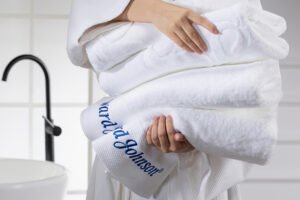
Hotel spa linens explained: massage table sheets, treatment towels, robes, and pool linens. Fabric, fit, lint, hygiene, and a checklist for approving samples.

In-house vs outsourced hotel laundry compared: volume, turnaround, space, staffing, quality control, and total cost per item. A framework and checklist for deciding.