Negotiating Linen Prices: Bulk Order Strategies for Maximum Savings
Introduction
A hotel manager is ready to order $15,000 worth of linens. But instead of just accepting the first quote, they do something smart: they negotiate.
The result: A 15-20% discount that saves $2,250-3,000 on this single order.
Most hotels don’t realize they have negotiating power. Suppliers expect it, budget for it, and account for discounts in their pricing. When a hotel accepts the first quote, they’re leaving thousands on the table.
The question isn’t “Can we negotiate linen prices?” The question is “How much are we leaving on the table by not negotiating?”
In this guide, we’ll cover negotiation strategies, bulk order pricing structures, how to evaluate competitor quotes, and how to maximize your purchasing power.
Understanding Linen Pricing Structures
Tier-Based Pricing
Most suppliers use volume-based pricing tiers:
| Order Size | Price Per Unit | Discount |
|---|
| 100-500 units | $12 | 0% |
| 500-2,000 units | $11 | -8% |
| 2,000-5,000 units | $10 | -17% |
| 5,000+ units | $9 | -25% |
| 10,000+ units | $8.50 | -29% |
Key Point: Pricing isn’t fixed—it’s negotiable within and across tiers.
Cost Components in Supplier Quotes
When you receive a quote, understand what you’re paying for:
| Component | Typical % | Notes |
|---|
| Materials | 40% | Cotton, dyes, thread |
| Labor | 20% | Manufacturing, QC |
| Overhead | 15% | Factory operations, admin |
| Profit Margin | 15% | Supplier’s profit target |
| Contingency | 10% | Risk buffer, miscellaneous |
Total: 100%
Why This Matters: Knowing the structure helps you negotiate intelligently. If you’re asking for a 50% discount, you’re asking them to eliminate profit entirely. Realistic negotiations target 10-20% discounts.
Pre-Negotiation Strategy
Step 1: Know Your Numbers
Before contacting suppliers, prepare:
- [ ] Exact quantities needed (from quantity planning article)
- [ ] Quality tier required
- [ ] Timeline for delivery
- [ ] Acceptable lead time
- [ ] Specifications (GSM, fiber, ply, color)
- [ ] Budget range
Why: Suppliers can tell when you’re unprepared. Specificity = negotiating power.
Step 2: Research Competitor Pricing
Get 3-5 competitive quotes:
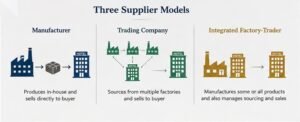
- Tier 1 Chinese suppliers (e.g., Galaxy)
- Turkish suppliers
- Indian suppliers
- Domestic suppliers (for reference)
Compare:
- Unit price
- Lead time
- MOQ (minimum order quantity)
- Quality certifications
- Payment terms
Why: You can’t negotiate if you don’t know market rates. “Competitor A offers X at Y price” is powerful leverage.
Step 3: Identify Your Leverage Points
What gives you negotiating power:
| Leverage Point | Strength | How to Use |
|---|
| Large order size | High | “We’re ordering 5,000 units” |
| Regular orders | Very High | “We plan to order quarterly” |
| Long-term relationship | Very High | “We want a 2-year partnership” |
| Fast payment | Medium | “We pay net-30” |
| Flexible timeline | Medium | “We don’t need it urgently” |
| Competitor quotes | High | “We have other options at X price” |
| Repeat loyalty | Very High | “We’ve ordered from you 3x before” |
Strategy: Combine 2-3 leverage points for maximum effect.
Negotiation Tactics
Tactic 1: The Direct Comparison
What to say:
"Your quote is $10/unit. Supplier X quoted $9.50/unit for the same
specifications. Can you match or beat that price?"
Why it works: Removes emotional negotiation. It’s purely factual.
Supplier Response: Usually matches or comes close.
Tactic 2: Volume Commitment
What to say:
"We're currently looking at a single 2,000-unit order. But if pricing
is right, we'd commit to quarterly orders for the next 2 years
(8,000 units total). Can you provide volume pricing?"
Why it works: Suppliers prefer predictable revenue. Lock in 8,000 units at better pricing than current quote.
Expected Discount: 5-10% additional discount
Tactic 3: Payment Terms as Leverage
What to say:
"Our standard payment is net-30. If you offer net-10 pricing, we can
pay faster and reduce your working capital needs. What discount applies?"
Why it works: Faster payment = supplier carries less risk.
Expected Discount: 2-5% discount
Tactic 4: Long-Term Partnership
What to say:
"We want to establish a primary linen supplier relationship. This order
is a test, but if everything goes well, we'll make you our exclusive
supplier for future orders. What volume pricing can you offer?"
Why it works: Suppliers value loyalty and predictability.
Expected Discount: 5-15% discount (higher for long-term)
Tactic 5: Bundling Different Items
What to say:
"We need 2,000 sheets at $10/unit and 1,000 towels at $9/unit. If we
bundle the order, what discount on the total package?"
Why it works: Larger total order = more leverage.
Expected Discount: 3-8% across both lines
Tactic 6: The Walk-Away
What to say:
"Your pricing is above market. We've gotten better quotes elsewhere.
Unless you can adjust pricing, we'll need to go with another supplier."
Why it works: Creates urgency. Supplier realizes they might lose the deal.
Warning: Only use if you’re genuinely willing to walk.
Expected Result: 10-20% discount attempt or serious negotiation starts.
The Negotiation Conversation
Email Approach (Recommended for Large Orders)
Subject Line:
Request: Volume Pricing for [Order Description]
Email Body:
Dear [Supplier],

We're preparing to place a significant order and would like to discuss
pricing for the following:

Quantity: 2,000 units
Specifications: 400 GSM Egyptian cotton sheets, [other specs]
Delivery: [Timeline]

Your current quote is $10.50/unit ($21,000 total).

We have received competitive quotes at $9.50-10/unit from other suppliers.
Additionally, we're considering establishing a long-term partnership with
a primary supplier (quarterly orders through 2025).

Could you:
1. Match or beat the competitor pricing?
2. Provide volume pricing for multi-year commitments?
3. Offer payment term discounts (net-10 vs net-30)?

We'd prefer to work with you if pricing aligns with the market.

Please advise by [date].

Best regards,
[Name]
Why This Works:
- Professional tone
- Specific numbers
- Multiple leverage points
- Clear deadline
- Easy for supplier to respond to
Phone/Video Approach (For Relationship Development)
Call preparation:
- Have all specifications ready
- Know competitor pricing
- Identify your walk-away price
- List your leverage points
- Have calendar available for timeline discussion
Call structure:
- Build rapport (first 2-3 min)
- State your needs clearly
- Share current quote(s)
- Ask for their best pricing
- Discuss volume/partnership options
- Negotiate specific terms
- Confirm next steps
Pro Tip: Let them talk first. Suppliers often offer discounts before you ask.
Negotiating Specific Terms
Pricing Negotiation
Starting position: Quote price – 15%
Walk-away position: Quote price – 5%
Realistic outcome: Quote price – 10%
Example:
- Quote: $10/unit
- Ask for: $8.50/unit (-15%)
- Settle at: $9/unit (-10%)
- Savings: $1/unit = $2,000 on 2,000-unit order
Lead Time Negotiation
Supplier’s interest: Longer lead time (they produce on their schedule)
Your interest: Faster delivery (for urgency)
Negotiation:
- Standard 8-week lead time
- You request: 4-week lead time
- Cost: Often 5-10% premium for rush
- Negotiate: “Can you reduce to 6 weeks at standard pricing?”
- Result: 6-week lead time, no premium
Payment Terms Negotiation
Standard: Net-30 (pay after 30 days)
Aggressive suppliers request: Net-60 or Net-90
Your interest: Extend terms if possible, pay early if discounts apply
Negotiation points:
- Net-30 vs Net-60: Usually not negotiable
- Early payment discounts: 2% discount if paid within 10 days is common
- Wire transfer discounts: Some suppliers offer 1-2% for immediate payment
Minimum Order Quantity (MOQ) Negotiation
Supplier’s standard: 1,000 minimum
Your need: 500 units only
Negotiation:
- “Can you reduce MOQ to 500 for 2-year partnership?”
- “What’s the price difference for 500 vs 1,000?”
- Often: MOQ stays but pricing for 500 is only slightly higher per unit
Common Negotiation Mistakes
❌ Mistake 1: Negotiating Over Email Without Relationship
Wrong: Send email asking for 20% discount without prior contact
Right: Call first to build relationship, then confirm details via email
Why: Personal relationships matter. Email feels impersonal and creates defensiveness.
❌ Mistake 2: Asking for Unrealistic Discounts
Wrong: Request 50% discount (eliminates profit)
Right: Request 10-15% discount (reasonable margin reduction)
Why: Unrealistic asks get rejected immediately. Reasonable asks get counter-offers.
❌ Mistake 3: Playing Suppliers Against Each Other Aggressively
Wrong: “Supplier X will beat your price by 30%”
Right: “Supplier X quoted $9/unit. Can you match that?”
Why: Aggressive tactics create resentment. Calm facts work better.
❌ Mistake 4: Negotiating Price While Ignoring Quality
Wrong: “Just give us the cheapest option”
Right: “We need Tier 1 quality at competitive pricing”
Why: Lowest price ≠ best value. You end up with poor quality.
❌ Mistake 5: Accepting First Offer
Wrong: “Thank you, we’ll take it” immediately
Right: “Thank you, let me review and get back to you”
Why: Gives you time to think, creates perception you’re considering options.
Evaluating Multiple Quotes
Comparison Matrix
Use this to compare suppliers fairly:
| Factor | Supplier A | Supplier B | Supplier C | Winner |
|---|
| Unit Price | $10.00 | $9.50 | $9.75 | B |
| Lead Time | 8 weeks | 6 weeks | 8 weeks | B |
| Certifications | ISO, Oeko-Tex | ISO, Oeko-Tex | ISO only | A/B |
| Quality Tier | Tier 1 | Tier 1 | Tier 2 | A/B |
| Payment Terms | Net-30 | Net-45 | Net-30 | A/C |
| Support Quality | Responsive | Very Responsive | Slow | B |
| Relationship | New | Established | Unknown | B |
Analysis: Supplier B wins on price + delivery + support. Worth $200 more than Supplier A for the faster delivery.
When to Walk Away
Walk away if:
- ❌ Pricing is 30%+ above market (indicates quality issues)
- ❌ Lead time is unrealistic (>12 weeks without good reason)
- ❌ Supplier is unresponsive to questions (predicts poor service)
- ❌ They refuse to provide references
- ❌ Quality specs are vague or non-specific
- ❌ You feel pressured into immediate decision
Good suppliers:
- ✅ Provide responsive communication
- ✅ Give detailed specifications
- ✅ Willing to provide samples
- ✅ Happy to discuss terms
- ✅ Offer references
- ✅ Don’t pressure you
Conclusion: Negotiation is Expected
Key takeaway: Suppliers expect to negotiate. Your first quote is their opening position.
By negotiating effectively, you:
- ✅ Save 10-20% on linen costs ($2,000-5,000+ annually)
- ✅ Build relationships with suppliers
- ✅ Establish favorable payment terms
- ✅ Secure commitment to quality
- ✅ Create predictable supply
The effort: 5-10 hours of negotiation
The return: Thousands saved annually
Ready to Negotiate Better Linen Pricing?
Galaxy Hotel Supplies welcomes negotiation:
✅ Transparent Pricing
- We show our best pricing upfront
- Volume discounts structured and clear
- Happy to discuss pricing strategy
✅ Partnership Approach
- We value long-term relationships
- Bulk order pricing available
- Volume commitment discounts
✅ Flexible Terms
- Payment terms negotiable
- Lead time options available
- Customization available
Request competitive quotes → Discuss bulk pricing → Schedule negotiation call →
Related Reading
Questions about negotiating linen prices? Email us at info@hotelsupplieschina.com
Galaxy Hotel Supplies believes in transparent, fair pricing and welcomes negotiation from serious hotel partners. Our goal is your success, which means fair pricing and strong relationships.