Manila Business Trip Wrap-Up: ELIYA & Galaxy Group Strengthens Local Client Partnerships
A brief recap of ELIYA & Galaxy Group’s client visits in Manila and safe return to Guangzhou after a productive hotel supply mission.

You’re comparing two suppliers offering similar towels at different prices. One says their products meet ISO 9001 standards. The other claims their sheets are Oeko-Tex certified. But what does this actually mean? And does it really matter for your hotel?
The short answer: Yes, it matters—a lot. Certifications are third-party verification that linens meet strict quality, safety, and environmental standards. They protect your guests, reduce liability, and ensure consistent quality that justifies premium pricing.
Yet many hotel managers don’t understand what these certifications actually guarantee. ISO 9001, Oeko-Tex, GOTS, IVN—these acronyms seem interchangeable, but they measure completely different things. Knowing the difference is critical to making informed sourcing decisions.
In this guide, we’ll demystify hotel linen certifications, explain what each one means, and show you how to verify they’re legitimate. By the end, you’ll know exactly which certifications matter for your property type and sourcing decisions.
Imagine this scenario: You order 500 bath towels from a new supplier. The price is 30% cheaper than competitors. No certifications mentioned, but the owner sends glossy samples and promises quality.
Three months later:
This happens constantly in hospitality procurement. Unverified suppliers cut corners on materials, dye quality, or safety standards to undercut pricing. You don’t discover the problems until after bulk orders arrive.
Third-party certifications protect you by:
✅ Quality Assurance: Independent inspection and testing ✅ Consistency: Same standards across all batches and suppliers ✅ Safety: Harmful substances removed or minimized ✅ Liability Protection: Legal documentation if issues arise ✅ Trade Compliance: Meets international regulations ✅ Brand Protection: Justifies premium positioning ✅ Guest Health: Peace of mind about allergens and chemicals
By Importance for Hotel Linens:
ISO 9001 ⭐⭐⭐⭐⭐
Oeko-Tex Standard 100 ⭐⭐⭐⭐⭐
GOTS (Organic) ⭐⭐⭐⭐
IVN (Natural Fiber) ⭐⭐⭐
ISO 9001 is an international standard that specifies requirements for a quality management system. It verifies that a company:
Think of it as: A certification that the manufacturer has a documented, verifiable system for quality control—not just good luck.
What ISO 9001 Guarantees:
✅ Consistency: Same quality across all batches ✅ Traceability: You can identify which batch had issues ✅ Continuous Improvement: Supplier tracks defects and fixes them ✅ Documentation: All testing results on file ✅ Third-Party Oversight: Annual external audits required
What It Does NOT Guarantee:
❌ The materials used (could be budget cotton) ❌ Environmental impact ❌ Chemical safety (that’s Oeko-Tex’s job) ❌ Worker conditions ❌ Premium luxury feel
For linen suppliers, ISO 9001 requires verification of:
| Standard | What It Checks | Hotel Relevance |
|---|---|---|
| Fiber Quality | Is it really Egyptian cotton? | Critical for quality claims |
| GSM Accuracy | Do towels match stated weight? | Affects durability |
| Seam Strength | Will stitching hold under washing? | Prevents early wear |
| Dye Fastness | Will colors fade or bleed? | Guest satisfaction |
| Shrinkage | How much do linens shrink? | Replacement planning |
| Tensile Strength | Can material withstand pulling? | Durability assessment |
| Pilling Resistance | Will towels pill after washing? | Quality perception |
Steps to confirm legitimacy:
Ask for Certificate Number
Verify the Certifying Body
Check Expiration Date
Request Test Reports
Sample Testing
Red Flags 🚩:
Oeko-Tex Standard 100 is a certification that verifies textiles are free from harmful chemicals. The test includes:
Think of it as: A health safety certification that says “this towel is safe to touch human skin without causing allergic reactions.”
Health & Safety:
Marketing Value:
Regulatory Compliance:
| Chemical | Why It Matters | Typical Issues |
|---|---|---|
| Formaldehyde | Causes allergies, respiratory issues | Added to reduce wrinkles in cheap sheets |
| Heavy Metals | Accumulate in body over time | From dyes and fabric treatments |
| Azo Dyes | Cause severe allergic reactions | Commonly used in budget fabrics |
| Pesticide Residues | Harmful to sensitive skin | From untreated cotton |
| Phthalates | Endocrine disruptors | Found in some synthetic materials |
| Lead | Neurotoxic especially for children | From low-quality dyes |
| Cadmium | Kidney damage | From industrial dyes |
For Hotel Linens, you’ll see:
Level 1: Baby Products (Most Strict)
Level 2: Products for Direct Skin Contact (Standard)
Level 3: Products Not for Skin Contact
Check Certificate Number
Verify on Oeko-Tex Database
Request Test Reports
Certification Status
Watch for Fake Certifications
Red Flags 🚩:
GOTS certifies that textiles are made from organic cotton grown without synthetic pesticides or GMO seeds. But it goes beyond farming—it also checks:
Think of it as: A combination of organic agriculture + worker rights + chemical safety all in one.
For Most Hotels: Optional luxury positioning For Eco-Conscious Properties: Important differentiator
When to Pursue GOTS:
When NOT Necessary:
| Factor | GOTS | Oeko-Tex |
|---|---|---|
| Scope | Entire supply chain | Chemical testing only |
| Pesticides | No synthetic pesticides allowed | Not specifically checked |
| Organic Cotton | 100% requirement | Not required |
| Worker Rights | Comprehensive | Not checked |
| Environmental Impact | Full lifecycle | Chemical-focused |
| Cost Premium | 15-25% | 5-10% |
| Necessity for Hotels | Nice-to-have | Essential |
| Certification Time | 12-18 months (first time) | 3-6 months |
Luxury Resort Positioning:
Without GOTS:
With GOTS:
IVN (Institut für Naturgestaltung) certification is a European standard that verifies:
Think of it as: The European equivalent of GOTS, with even stricter standards.
IVN is Rare for Most Hotels
Who Needs It:
Who Doesn’t:
What It Is: Legal requirement to sell textiles in the EU
Relevance: Automatic if sourcing from Europe; not an optional quality mark
Required: ✅ Yes, if selling to European markets Cost: Minimal (already included in production)
What It Is: Australian eco-certification for textiles
Relevance: Only relevant for Australian hotels
Required for Australia: ✅ Yes, increasingly common Cost: Moderate premium
What It Is: EU regulation on chemical substances in products
Relevance: Required for all textiles sold in Europe
Required for EU Sourcing: ✅ Yes Cost: Included in EU manufacturing
What It Is: Non-organic cotton program with improved farming practices
Relevance: Middle-ground between conventional and organic cotton
Best For: Hotels wanting sustainability without full organic premium
Cost: 5-8% premium over conventional
| Certification | Importance | Cost | Requirement |
|---|---|---|---|
| ISO 9001 | ⭐⭐⭐⭐⭐ | Included | Mandatory |
| Oeko-Tex | ⭐⭐⭐⭐ | 5-8% | Highly Recommended |
| GOTS | ⭐⭐ | 15-25% | Optional |
| IVN | ⭐ | 20-30% | Not necessary |
Recommendation: ISO 9001 + Oeko-Tex Total Premium: 5-8% over uncertified
| Certification | Importance | Cost | Requirement |
|---|---|---|---|
| ISO 9001 | ⭐⭐⭐⭐⭐ | Included | Mandatory |
| Oeko-Tex | ⭐⭐⭐⭐⭐ | 5-8% | Mandatory |
| GOTS | ⭐⭐⭐ | 15-25% | Recommended |
| IVN | ⭐ | 20-30% | Optional |
Recommendation: ISO 9001 + Oeko-Tex + GOTS (partial line) Total Premium: 20-35% for certified line
| Certification | Importance | Cost | Requirement |
|---|---|---|---|
| ISO 9001 | ⭐⭐⭐⭐⭐ | Included | Mandatory |
| Oeko-Tex | ⭐⭐⭐⭐⭐ | 5-8% | Mandatory |
| GOTS | ⭐⭐⭐⭐⭐ | 15-25% | Recommended |
| IVN | ⭐⭐⭐ | 20-30% | Recommended |
Recommendation: ISO 9001 + Oeko-Tex + GOTS + IVN Total Premium: 40-60% over uncertified standard
Step 1: Get Certificate Number
Step 2: Check Issuing Organization
Step 3: Database Lookup
Step 4: Request Test Reports
Step 5: Contact Verifier Directly
Red Flags 🚩:
| Warning Sign | What It Means |
|---|---|
| Vague certificate numbers | Likely fabricated |
| Can’t be found in official database | Definitely fake |
| Supplier avoids showing certificate | They don’t have it |
| Generic certificates (no specifics) | Usually falsified |
| Extremely old dates (5+ years) | Outdated or fake |
| Certificate from unknown body | Unaccredited certifier |
| No detailed test reports available | Questionable authenticity |
To Achieve ISO 9001:
For smaller suppliers:
For large manufacturers:
Uncertified Supplier: $12/towel ISO 9001 Certified: $13/towel (+8%) ISO 9001 + Oeko-Tex: $13.65/towel (+14%) ISO 9001 + Oeko-Tex + GOTS: $16/towel (+33%)
The premium reflects real costs and benefits, not just marketing.
For small manufacturers:
Result: Budget suppliers often skip certifications
Suppliers without certifications often:
This is why they’re cheaper—they’re cutting more than just certification costs.
Legitimate reasons for no certifications:
Red flags for avoiding certifications:
For your property, decide:
Sample Policy:
All bed linens must be ISO 9001 + Oeko-Tex certified.
Towels must be ISO 9001 + Oeko-Tex certified.
Premium Egyptian cotton line must be GOTS certified.
All certifications must be current and verified.
When requesting quotes, include:
"Please provide:
1. ISO 9001 certificate number and verification link
2. Oeko-Tex certificate number and direct link to database
3. Current test reports from accredited lab
4. Proof of certification status (not expired)

Uncertified products will not be considered for bulk orders."
Never commit to 5,000+ units without:
Add to your supplier agreements:
"Supplier warrants that all products meet or exceed:
- ISO 9001 quality standards
- Oeko-Tex Standard 100 (or equivalent) safety requirements
- Specifications provided in RFQ

Supplier must provide current certifications within 15 days
of order and maintain certifications throughout supply relationship.

Failure to maintain certifications provides grounds for
order cancellation and material return at supplier expense."
“Can you provide your ISO 9001 certificate number? I’ll verify it in the accreditation database.”
“Are your products Oeko-Tex certified? If so, which level?”
“Can you provide test reports from your last certification audit?”
“Have you had any failed audits or certification suspensions?”
“Can I contact one of your current hotel clients as a reference?”
Reality: Oeko-Tex tests for chemical safety only. Fabric can be conventional cotton, synthetic, or blended. If organic is important, look for GOTS certification specifically.
Reality: ISO 9001 verifies a system for quality control, not the final quality level. A budget manufacturer can be ISO 9001 certified for budget cotton. Doesn’t guarantee luxury.
Reality: Certifications verify specific standards, not overall reliability. A supplier could be ISO 9001 certified but have terrible customer service or unreliable shipping. Verify certifications AND check references.
Reality: All hotels benefit from certified linens. Certifications prevent costly quality problems and guest complaints across all property types.
Reality: All certifications expire and require annual or triennial renewal. An old certificate doesn’t mean the supplier still meets standards—they may have failed recertification.
In the hotel linen market, certifications are the only objective measure of quality. Without them, you’re trusting a supplier’s word—and word-of-mouth can be misleading.
Three Key Takeaways:
ISO 9001 is non-negotiable ✓
Oeko-Tex is essential ✓
GOTS is optional but valuable ✓
Smart hotel procurement starts with certifications. They’re not just compliance checkboxes—they’re your guarantee that linens meet the standards you promised your guests.
Galaxy Hotel Supplies guarantees all products are:
✅ ISO 9001 Certified
✅ Oeko-Tex Standard 100 Certified
✅ GOTS Certified (for premium lines)
Every certificate is verifiable, current, and backed by third-party testing. We provide documentation with every order.
Request certified samples → Browse certified products →
Must Have: ISO 9001, Oeko-Tex Cost Premium: ~8% over uncertified Verification: Check database + request test reports
Must Have: ISO 9001, Oeko-Tex, GOTS (recommended) Cost Premium: ~25-35% over uncertified Verification: Check database + contact supplier + verify 2+ references
Must Have: ISO 9001, Oeko-Tex, GOTS, IVN (recommended) Cost Premium: ~40-60% over uncertified Verification: Full verification protocol + request samples + test in house
Questions about hotel linen certifications? Email us at info@hotelsupplieschina.com or WhatsApp +8618026313091
Galaxy Hotel Supplies works with certified manufacturers worldwide. All certifications are current, verified, and transparent. We believe in building trust through transparency.
A brief recap of ELIYA & Galaxy Group’s client visits in Manila and safe return to Guangzhou after a productive hotel supply mission.
Discover how ELIYA & Galaxy Group empowers DIYIN Lake Eco-Tourism Resort with one-stop hotel supplies and custom guestroom textile renewals.

A quick wrap-up of ELIYA & Galaxy Group’s successful first day at the Hotel & Foodservice Suppliers Show 2026 in Manila, featuring grand opening highlights and client consultations.
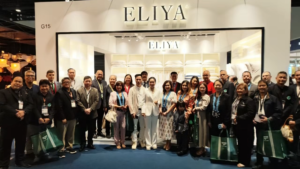
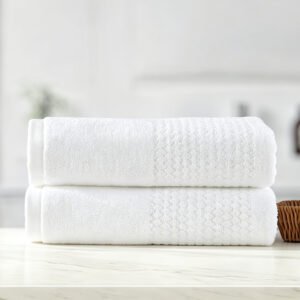
High-density sateen bed sheets, custom-embroidered pillowcases, plush bath towels, and hotel guestroom accessories showcased by ELIYA & Galaxy Group at Booth G15 during the Philippines expo.